Miqat Points Explained: A Step-by-Step Guide for First-Time Pilgrims
Confused about Miqat before Hajj or Umrah? Learn the 5 Miqat points, when to wear Ihram, preparation steps, and common mistakes first-time pilgrims should avoid.
Hajj and Umrah are not just trips. They are life-changing journeys. Every Muslim who travels to Makkah for pilgrimage prepares both the body and the heart. The body travels by plane or bus. The heart travels toward Allah. Before entering Makkah, pilgrims must follow certain rules. One very important rule involves Miqat. Many first-time pilgrims hear this word and feel confused. What is Miqat? Where is it? What happens there?
Do not worry. This guide explains everything step by step.
What Is Miqat?
Miqat is a fixed boundary around Makkah. It is not just one place. It includes several specific locations. A pilgrim must enter the state of Ihram before crossing this boundary.
The word Miqat in Arabic means "appointed place" or "fixed time." In the context of Hajj and Umrah, it refers to a specific place where pilgrims must prepare spiritually before entering Makkah. If someone crosses Miqat without being in Ihram, that becomes a serious mistake. In most cases, the person must return or offer a penalty.
So Miqat is not optional. It is required.
What Does "State of Ihram" Mean?
Before understanding Miqat fully, we must understand Ihram.
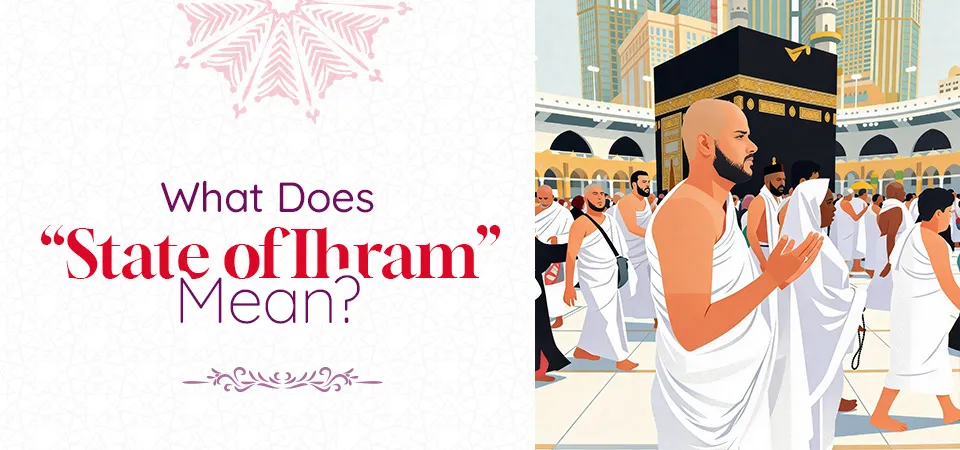
Ihram is a special, sacred state. It begins with intention and includes specific clothing and rules. When a pilgrim enters Ihram, they leave behind normal daily habits and focus fully on worship. For men, the Ihram consists of two simple white pieces of cloth. These are unstitched sheets. One wraps around the waist. The other covers the upper body.
For women, Ihram does not require special white sheets. Women wear modest, loose clothing that covers the body properly. They do not need a specific colour. But Ihram is not just clothing. It is a mindset. It is the start of humility, equality, and devotion. Miqat is the place where this sacred state begins.
Miqat Points Explained
Now that we understand what Miqat means, let us move to the practical part.
- Where exactly are these Miqat points?
- Which one applies to you?
- What should you actually do there?
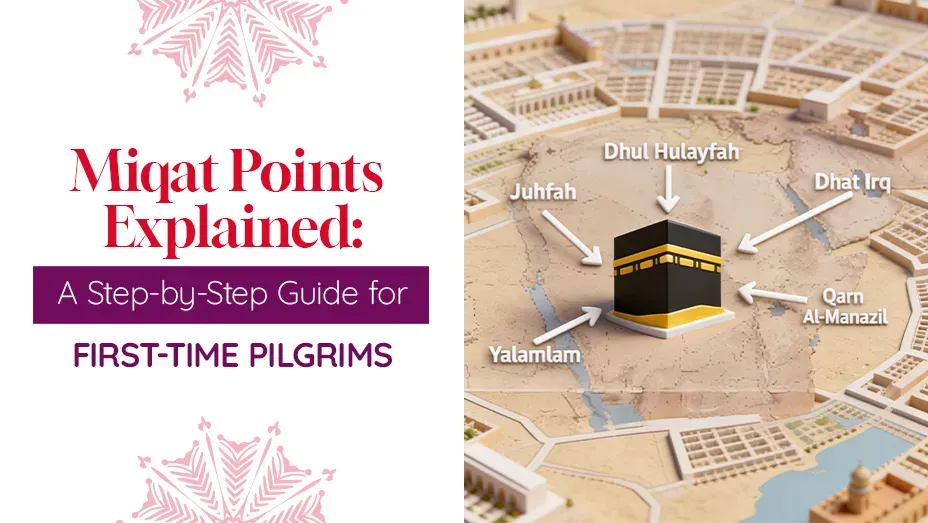
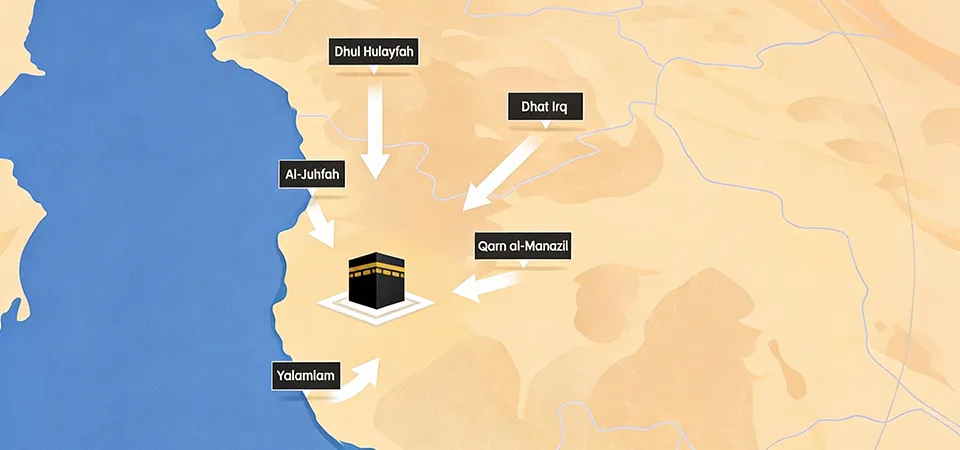
The Prophet Muhammad (peace be upon him) defined five specific Miqat points. Each one serves pilgrims coming from a certain direction. These are not random stops. They are official boundaries. Pilgrims must enter the Ihram before crossing them.
1. Dhul Hulaifah (Abyar Ali)
For Pilgrims Coming from Madinah
Dhul Hulaifah is the Miqat for people travelling from Madinah. It is the farthest Miqat from Makkah. It is located about 18 kilometres outside Madinah and around 450 kilometres from Makkah. Because it is far, pilgrims from Madinah usually enter Ihram there before beginning the long journey. This Miqat has a large mosque. It includes prayer areas, washing facilities, showers, and changing spaces. Pilgrims can prepare comfortably before continuing their journey.
This is also the Miqat used by the Prophet during his Farewell Pilgrimage. That makes it historically important.
If you travel from Madinah to Makkah by bus, this is your Miqat.
2. Al-Juhfah (Today Commonly Rabigh)
For Pilgrims Coming from the West
Al-Juhfah serves pilgrims coming from Egypt, North Africa, and parts of Europe. The original location of Al-Juhfah is no longer widely used because the area declined over time. Today, pilgrims use Rabigh, which lies nearby. Rabigh is about 183 kilometres from Makkah. Many international flights landing in Jeddah pass near this Miqat line.
Pilgrims coming from Western countries often prepare for Ihram before landing or while flying over this boundary.
If your flight approaches Makkah from the west, this Miqat applies to you.
3. Qarn al-Manazil (As-Sail al-Kabeer)
For Pilgrims Coming from Central Arabia
This Miqat serves people coming from Najd and central areas like Riyadh. It is located near Taif and sits about 90 kilometres from Makkah. This Miqat has good facilities, including prayer areas and preparation spaces. Many pilgrims travelling by road use this point. Because Riyadh sends a large number of pilgrims every year, this Miqat is frequently used.
If you are travelling from central Saudi Arabia, this is your Miqat.
4. Yalamlam
For Pilgrims Coming from Yemen and Southern Regions
Yalamlam is located about 92 kilometres south of Makkah. It serves pilgrims travelling from Yemen and the southern directions. Today, many pilgrims from India, Pakistan, Bangladesh, and Southeast Asia use Yalamlam. This happens especially when flights approach Saudi Arabia from southern routes. Even though these pilgrims travel by air, the Miqat line still applies to them. So they must enter the Ihram before crossing the Yalamlam boundary in the air.
This Miqat is extremely important for South Asian pilgrims.
5. Dhat Irq
For Pilgrims Coming from Iraq and the Northeast
Dhat Irq is located about 94 kilometres northeast of Makkah. It serves pilgrims coming from Iraq and the nearby northeastern regions. Compared to other Miqat points, it is less crowded. However, it remains important for pilgrims coming from those directions.
Every Miqat point carries equal religious value. No point is more important than another. Each one serves a direction.
What If You Are Flying?
Many first-time pilgrims panic about this. When travelling by plane, you may cross Miqat while in the air. Because of this, airlines usually announce when the plane approaches Miqat. Pilgrims should wear Ihram before boarding or changing during the flight before crossing the boundary.
Miqat for People Travelling by Road or Bus
Not everyone flies. Many pilgrims travel by bus, especially between Madinah and Makkah. If you travel by road, drivers usually stop at the Miqat mosque. But do not assume automatically. Always confirm with your group leader. Some buses may not stop long. So change into Ihram before the bus reaches Miqat if needed.
Step-by-Step: What to Do Before Crossing Miqat
This part is important for first-time pilgrims. You must complete these steps before crossing Miqat.
Step 1: Clean Yourself Properly
Take a full shower. This is called Ghusl, which means a complete body wash for purification. If that is not possible, perform Wudu, which means washing hands, face, arms, and feet before prayer. This step prepares you physically and spiritually.
Step 2: Wear Ihram Clothing
Men wear two white unstitched cloths. No stitched clothes are allowed. Women wear modest, loose clothing. No special white cloth is required. Remove perfume. Remove fancy accessories. Keep it simple.
Step 3: Make Your Intention (Niyyah)
Niyyah means intention. You must clearly intend in your heart whether you are performing Hajj or Umrah.
You can say:
"Labbaik Allahumma Umrah"
This means: O Allah, I am here to perform Umrah.
Intention is not just words. It is commitment.
Step 4: Recite Talbiyah
After making intention, you say Talbiyah:
"Labbaik Allahumma Labbaik…"
It means: Here I am, O Allah.
Pilgrims continue reciting Talbiyah until they reach Makkah. This marks the official start of the pilgrimage.
What Happens If Someone Breaks an Ihram Rule?

Breaking an Ihram rule is serious, but the solution depends on what happened.
In some cases, a person may need to:
- Offer a sacrifice
- Fast for a few days
- Feed poor people
The exact action depends on the type of mistake. Because of this, if someone accidentally breaks a rule, they should ask a knowledgeable scholar for guidance. Do not panic. Just seek correct advice.
Why Is Miqat So Important?
Miqat holds a strong spiritual meaning. It prepares the heart before entering the holy city.
A Spiritual Beginning
Miqat marks the moment when a pilgrim steps away from everyday life. Work, money, social status, and personal differences all fade. Everyone dresses simply. Everyone stands equal. This moment feels powerful. It reminds pilgrims that, in the eyes of Allah, all humans are the same.
A Clear Religious Command
The Prophet Muhammad (peace be upon him) clearly defined the Miqat points. He instructed pilgrims to enter the Ihram before crossing them. Because this instruction comes from the Prophet, following it becomes an act of obedience. Obedience in Islam means following what Allah and His Messenger commanded.
If someone ignores Miqat without a valid reason, they must offer a penalty called Dam. Dam means sacrificing an animal as a form of compensation.
A Mental Shift
Miqat is not just about location. It is about preparation. When pilgrims reach Miqat, they pause. They pray and make an intention. They say Talbiyah. This shift changes their focus. They move from travel mode to worship mode.
Common Mistakes First-Time Pilgrims Make

First-time pilgrims often feel nervous. That is completely normal. However, small misunderstandings can turn into serious mistakes if someone does not prepare properly. So let us go through the most common errors clearly and calmly.
Crossing Miqat Without Wearing Ihram
This is one of the most common mistakes. Some pilgrims think they can wait until they reach Jeddah airport to put on the ihram. That is not correct if the plane already crossed the Miqat boundary in the air. Miqat applies even when you are flying. Airlines usually announce when the aircraft approaches Miqat. If you wait too long, you may cross the boundary without being in Ihram.
If that happens, you must either return to Miqat or pay a penalty called Dam. So always prepare early.
Delaying the Intention (Niyyah)
Some pilgrims wear the Ihram clothes but forget to make intention before crossing Miqat. Ihram is not just clothing. It begins with intention. Without intention, the Ihram is incomplete. Make your intention clear in your heart before crossing Miqat. Then say Talbiyah immediately. Do not treat it as a small detail. It is the start of your pilgrimage.
Forgetting to Recite Talbiyah
After making intention, pilgrims must recite Talbiyah. Some people delay it or forget it completely.
Talbiyah begins with:
"Labbaik Allahumma Labbaik…"
This declaration officially begins your sacred journey. It shows that you are answering Allah’s call. Do not rush this moment. Say it calmly and clearly.
Wearing Stitched Clothing After Entering Ihram
Some men mistakenly continue wearing stitched underwear or shirts under their Ihram sheets. For men, stitched clothing is not allowed during the Ihram. Before entering Miqat, double-check your clothing. Make sure you follow the rules properly. Women do not face this restriction. They can wear regular modest clothing.
Applying Perfume After Entering Ihram
Perfume becomes forbidden once you enter the ihram. Some people apply fragrance out of habit, without realising they are already in Ihram. Perfume includes body spray, scented lotion, or strong fragrance oils. Apply any fragrance before making an intention. After that, avoid it completely.
Cutting Nails or Hair Without Realising
Sometimes, pilgrims trim nails or adjust hair without thinking. After entering the Ihram, cutting nails and shaving hair become prohibited. These actions may seem small, but they carry rules. So, remain aware once Ihram begins.
Not Knowing Your Correct Miqat
Some travellers feel unsure about which Miqat applies to them. This confusion can be dangerous, especially during air travel. Each direction has its assigned Miqat. If you are unsure, ask your group leader or travel organiser before departure.
Never assume. Always confirm.
Thinking Miqat Is Just a Physical Stop
Some pilgrims treat Miqat like a simple border crossing. They focus only on clothes and forget the spiritual meaning. Miqat is the moment of transition. It is when your mindset changes from travel to worship. If someone rushes through it without reflection, they miss the deeper meaning. Take a moment. Pause. Make du’a. Prepare your heart.
Entering Ihram Too Late Out of Fear
Some first-time pilgrims hesitate because they worry about making mistakes in Ihram. So they delay wearing it. This fear sometimes causes them to cross Miqat unintentionally. It is better to enter the Ihram slightly earlier than too late. Preparing early removes pressure.
Ignoring Guidance from Travel Leaders
Group leaders often announce when Miqat is approaching. Some pilgrims ignore these instructions or stay distracted. Stay alert during travel. Listen carefully. Ask questions if unsure.
Why Learning Before Travelling Is So Important
Many first-time pilgrims feel anxiety because they try to learn everything at the airport. That creates confusion. When you study Miqat calmly before travel, you feel confident. You do not panic when the pilot announces the boundary. You already know what to do.
Final Thoughts
Miqat is not just a boundary on a map. It is the real starting point of your pilgrimage. The moment you prepare for Miqat, your journey changes from travel to worship. Many first-time pilgrims focus only on reaching Makkah. But the journey truly begins before that. It begins when you make an intention and say Talbiyah. It begins when you step into humility at Miqat.
Understanding Miqat clearly removes fear. You no longer feel confused about when to wear Ihram or what to say. Instead, you feel ready. You feel calm. Every Miqat point reminds pilgrims that Hajj and Umrah are not rushed activities. They require discipline. They require awareness. Most importantly, they require sincerity.
If you prepare properly, Miqat becomes a powerful moment. It becomes the point where your heart turns fully toward Allah. And that is the most beautiful way to begin any sacred journey.