Historic Places to Visit in Madinah During Umrah (Complete Ziyarat Guide)
Discover the most historic and religious sites of Madinah during your Umrah journey, including Masjid an-Nabawi, the blessed Rawdah, Quba Mosque, Mount Uhud, and Jannat al-Baqi, with helpful tips to make your ziyarat truly meaningful and memorable.
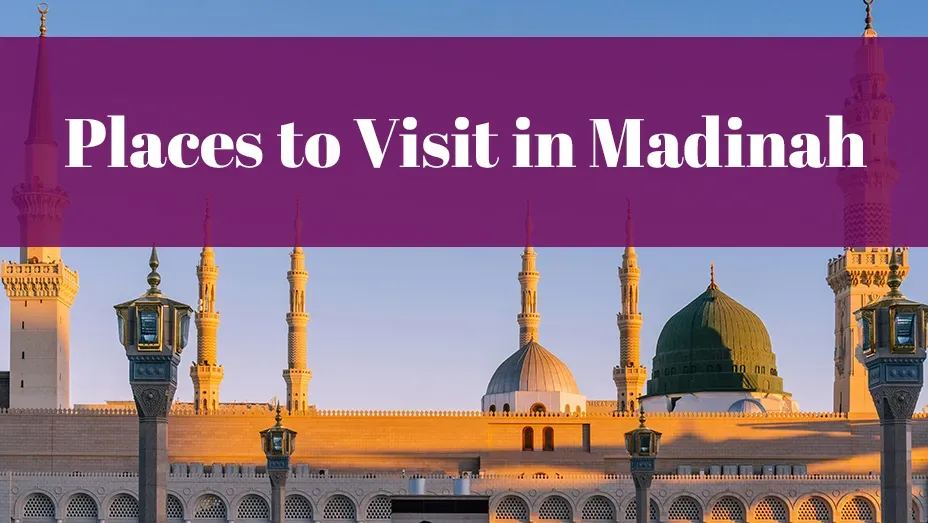
Madinah is a very special city for Muslims. It is called the city of the Prophet Muhammad (PBUH). For a long time, it has been a place of faith, learning, and community.
Every street, building, and place in the city has a story from Islamic history. So, visiting these historic sites helps pilgrims feel closer to their faith and understand the past in a meaningful way.
Places to Visit in Madinah During Umrah
Below are the most important historical places to visit in Madinah during Umrah, each connected to key moments in Islamic history.
Al-Masjid an-Nabawi
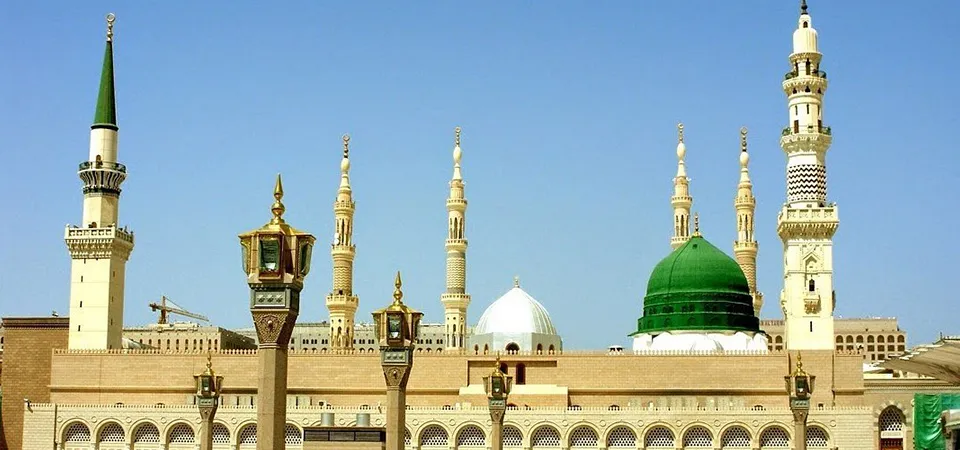
Firstly, Al-Masjid an-Nabawi, also called the Prophet's Mosque, is the most important mosque in Madinah. People feel peace and a strong connection to Islamic history when they go there.
The History & Construction
The Prophet Muhammad (PBUH) initially constructed the mosque soon after he moved to Madinah. At that time, it was a modest structure constructed of mud with a roof of palm leaves. People used it to pray, learn, and meet as a community. Over the years, many rulers made the mosque bigger and more beautiful. Today, Al-Masjid an-Nabawi can hold hundreds of thousands of people. Its large courtyards, tall towers, and detailed designs show the love and hard work of many generations.
The Green Dome
The Green Dome is among the mosque's most well-known features. It is situated above the tomb of Prophet Muhammad (PBUH). The dome was first built in the early 1200s and has been improved many times since then.
The Importance of Rawdah Al-Jannah
Lastly, Rawdah Al-Jannah, also known as the "Garden of Paradise," is a small area between the Prophet's tomb and his pulpit. Praying here is very special because the Prophet (PBUH) said it is one of the gardens of Paradise. Many people come to pray, think, and make du'a in this place. It can be very crowded because of its importance, but visiting it is a profoundly moving and rewarding experience.
Quba Mosque
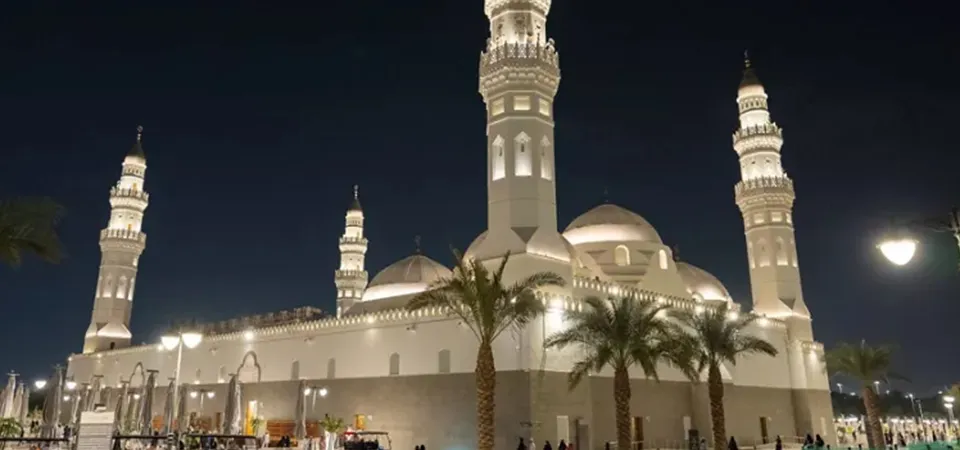
The Quba Mosque is a significant and historic place in Madinah. It is the first mosque ever built in Islamic history.
The Story Behind Quba Mosque's Foundation
The Quba Mosque was built when Prophet Muhammad (PBUH) moved from Makkah to Madinah. When he arrived, he and his companions started building it. So, people go there to pray, meet each other, and learn about Islam. The mosque shows unity, faith, and the start of the Muslim community in Madinah.
Rewards of Praying in the Quba Mosque
Praying in the Quba Mosque is very special and brings great rewards. Islamic teachings say that praying just two rak'ahs (units of prayer) is like performing an Umrah. Because of this, many pilgrims want to visit the Quba Mosque to earn extra blessings.
Mount Uhud
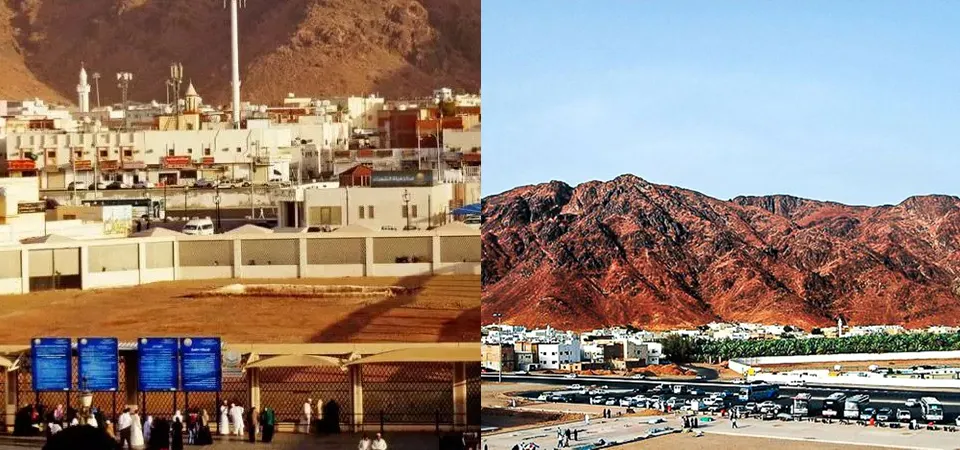
Mount Uhud is a famous mountain just north of Madinah. It is very beautiful and also very important in Islamic history.
The Battle of Uhud & Its Lessons
The legendary Battle of Uhud, which took place in the third year following the Hijrah, was fought on Mount Uhud. This battle is crucial in Islamic history. It teaches us about courage, faith, and staying strong in hard times. The Prophet Muhammad (PBUH) and his companions were very brave, even when the enemy was strong. Today, visiting Mount Uhud helps pilgrims understand the struggles of early Muslims and the lessons of patience, trust, and faith in Allah.
Visiting the Graves of the Martyrs
Moreover, at the bottom of Mount Uhud is the graveyard of the martyrs from the battle. Pilgrims can visit these graves to show respect to the companions who died for Islam. It helps pilgrims feel a strong connection to the history of the Prophet's time.
Masjid al-Qiblatayn
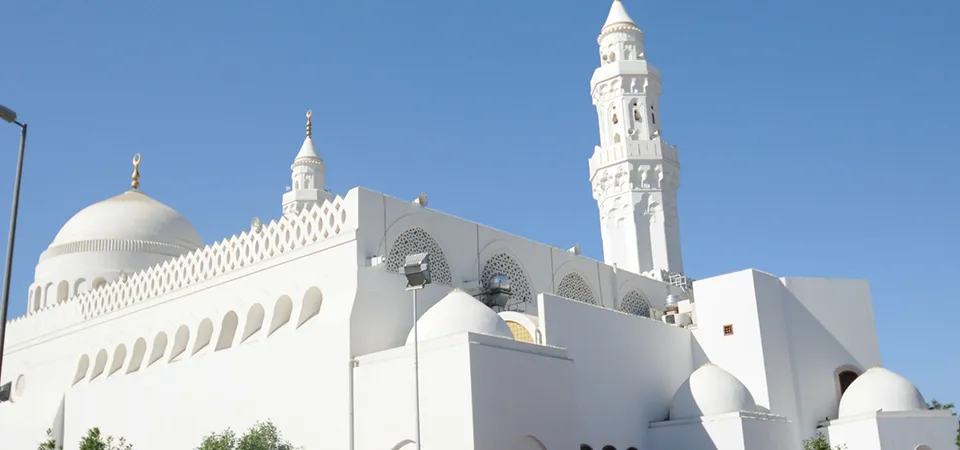
Known as the Mosque of the Two Qiblas (Masjid al-Qiblatayn), it is an important mosque in Madinah. People visit it not only for its spiritual value but also due to its history.
Masjid al-Qiblatayn is an essential mosque because it is where Allah commanded the Prophet Muhammad (PBUH) to change the direction of prayer from Jerusalem to Makkah. This was a crucial moment for Muslims. Today, the mosque has two prayer niches called mihrabs. One mihrab faces Jerusalem, and the other faces Makkah to remind people of this historic event.
The Seven Mosques (Sab'ah Masajid) & the Trench Site
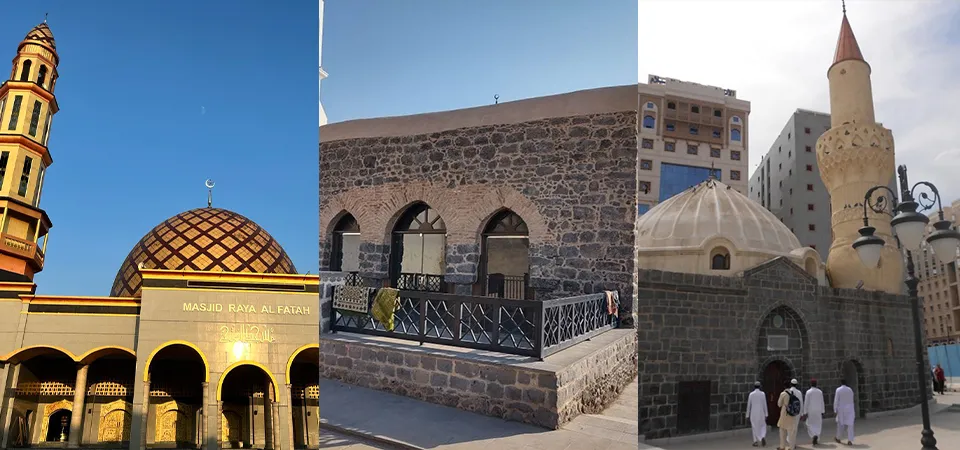
The Seven Mosques, called Sab'ah Masajid, are a group of small mosques on the edge of Madinah. They are near the site of the Battle of the Trench, which happened a long time ago. Visitors can see both the history and the religious significance of early Islam. Visiting the Seven Mosques and the Trench helps you understand the courage, planning, and faith of the Prophet Muhammad (PBUH) and his companions.
The Story of the Battle of the Trench
The Battle of the Trench took place in 627 CE. A big army wanted to attack the city of Madinah. To protect the city, the Prophet (PBUH) and his companions dug a deep trench around the city's weak spots. The enemy had never seen this before and could not get through. This stopped the attack and became an essential moment in Islamic history. Today, the Trench Site is a historic place where pilgrims can see and feel this critical event.
The Historical Role of Each of the Seven Mosques
The Seven Mosques are small mosques scattered across the battlefield. Each one is linked to an important event or companion of the Prophet Muhammad (PBUH).
- Masjid al-Fatah: This mosque is where the Prophet (PBUH) and his companions made plans for the battle.
- Masjid Salman al-Farsi: Named after Salman the Persian. He suggested digging a trench for protection.
- Masjid Abu Bakr: This mosque marks the spot where Abu Bakr (RA), the first caliph, fought in the battle.
- Masjid Umar ibn al-Khattab: Honors Umar (RA) for helping defend Madinah.
- Masjid Ali ibn Abi Talib: Marks the area where Ali (RA) was during the battle.
- Masjid Sa'd ibn Mu'adh: Named after Sa'd (RA), who helped organize the city's defense.
- Masjid al-Khandaq: This mosque commemorates the entire battle, as the word Khandaq means "Trench."
Jannat al-Baqi & Other Notable Sites
Madinah has many old and important places. One special place is Jannat al-Baqi. Visiting these places helps you learn about Islamic history and makes your Umrah journey more meaningful.
The Significance of Al-Baqi Cemetery
One of Islam's oldest and most significant cemeteries is Jannat al-Baqi. Many Muslims have been buried here since the time of the Prophet Muhammad (PBUH). The cemetery is more than just a burial site. It is a part of Islamic history and shows love and respect for the faith.
Notable Companions & Family Members Buried There
Al-Baqi is a cemetery where many of the Prophet's (PBUH) companions are buried. These include scholars, leaders, and people who helped build the early Islamic community. Some members of the Prophet's family are also buried here. So, visiting their graves helps pilgrims understand the sacrifices and contributions of these important people and learn about the beginnings of Islamic history.
Other Must-See Historical Spots in Madinah
Lastly, beyond Al-Baqi, Madinah has many old and important places. Visitors often go to sites connected to the Prophet's life, early mosques, and events in Islamic history. Each place has its own story and helps people understand the city's spiritual and historical importance.