Ramadan Fasting Rules for Travellers: Exemptions, Travel Tips & Breaking Fast
Travelling during Ramadan? Learn when you can break your fast, travel distance rules in Islam, time zone guidance, and how to make up missed fasts (Qada, Fidyah & Kaffarah). Practical tips for Muslim travellers.
Ramadan- a month of lights, and for believers, it is a time of the year that brings countless blessings, where they have to fast from dawn to sunset. Not everyone stays at home or in the town during Ramadan; some have to travel, so it is not the same for everyone. There is no doubt that travelling is hard on the body and mind. That’s why Ramadan fasting rules for travellers often raise some practical questions, especially for Muslims in the UK who travel by plane, train, or car.
Whether you’re catching a flight from Heathrow, taking a long train ride, or driving across time zones, you must know Ramadan fasting rules that apply to your situation. Because of the stress of travel, you don't always have to fast. You might be wondering: Do I have to fast on my trip? Is it okay to break it? If I do, how do I make it up later? Islam makes things easier, so allow certain exemptions for travellers. This guide explains exactly what you need to know about the Ramadan fast rules for travellers and gives you easy tips to stay healthy and stress-free on your journey.
What Are Ramadan Fasting Rules?
You should abstain from food, drink, and other invalidators from Suhoor (pre-dawn meal) until Iftar (sunset). All you need to do is make the right intention in your heart, follow the rules, like keep yourself away from the actions that break the fast. and stick to the right timing to make your fast count.
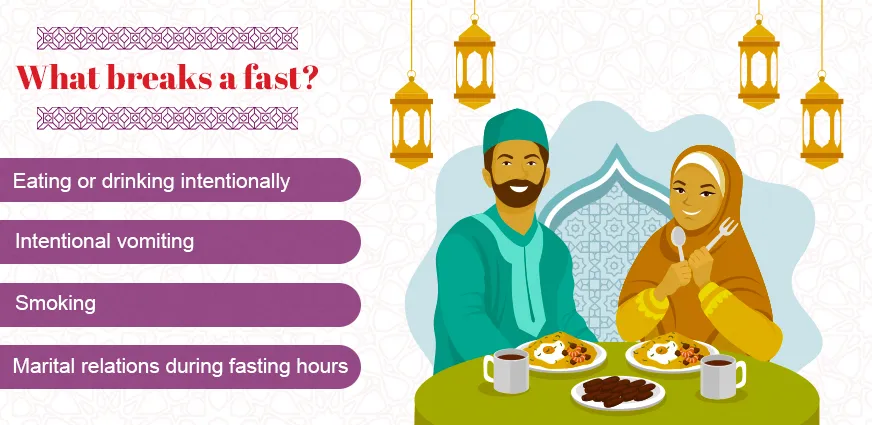
What breaks a fast?
- Eating or drinking intentionally
- Intentional vomiting
- Smoking
- Marital relations during fasting hours
Accidental eating or drinking does not invalidate the fast.
Islamic Perspective on Travelling During Ramadan Fasting
Travelling is hard and can make you really tired. Because of this, Islam makes things easier for you during Ramadan. If you are on a trip, you are allowed to change how you fast so you don't get too exhausted. This way, you can focus on God without making yourself feel sick or worn out.
What the Quran and Hadith Say About Travellers
Islam provides ease for people who are travelling. In the Quran, Allah says:
شَهْرُ رَمَضَانَ ٱلَّذِىٓ أُنزِلَ فِيهِ ٱلْقُرْءَانُ هُدًۭى لِّلنَّاسِ وَبَيِّنَـٰتٍۢ مِّنَ ٱلْهُدَىٰ وَٱلْفُرْقَانِ ۚ فَمَن شَهِدَ مِنكُمُ ٱلشَّهْرَ فَلْيَصُمْهُ ۖ وَمَن كَانَ مَرِيضًا أَوْ عَلَىٰ سَفَرٍۢ فَعِدَّةٌۭ مِّنْ أَيَّامٍ أُخَرَ ۗ يُرِيدُ ٱللَّهُ بِكُمُ ٱلْيُسْرَ وَلَا يُرِيدُ بِكُمُ ٱلْعُسْرَ وَلِتُكْمِلُوا۟ ٱلْعِدَّةَ وَلِتُكَبِّرُوا۟ ٱللَّهَ عَلَىٰ مَا هَدَىٰكُمْ وَلَعَلَّكُمْ تَشْكُرُونَ ١٨٥
Ramaḍân is the month in which the Quran was revealed as a guide for humanity with clear proofs of guidance and the decisive authority. So whoever is present this month, let them fast. But whoever is ill or on a journey, then ˹let them fast˺ an equal number of days ˹after Ramaḍân˺. Allah intends ease for you, not hardship, so that you may complete the prescribed period and proclaim the greatness of Allah for guiding you, and perhaps you will be grateful.
Several Hadith also show that the Prophet Muhammad (peace be upon him) sometimes fasted while travelling and sometimes did not. Narrated 'Aisha: Hamza bin 'Amr Al-Aslami asked the Prophet (ﷺ), "Should I fast while travelling?" (and he used to fast a lot). The Prophet (ﷺ) replied, "You may fast if you wish, and you may not fast if you wish."
Source: Sahih al-Bukhari 1943; Sahih Muslim 1121.
This shows flexibility based on personal circumstances. Islam does not want worship to become a hardship.
Who Qualifies as a “Traveller” in Islam
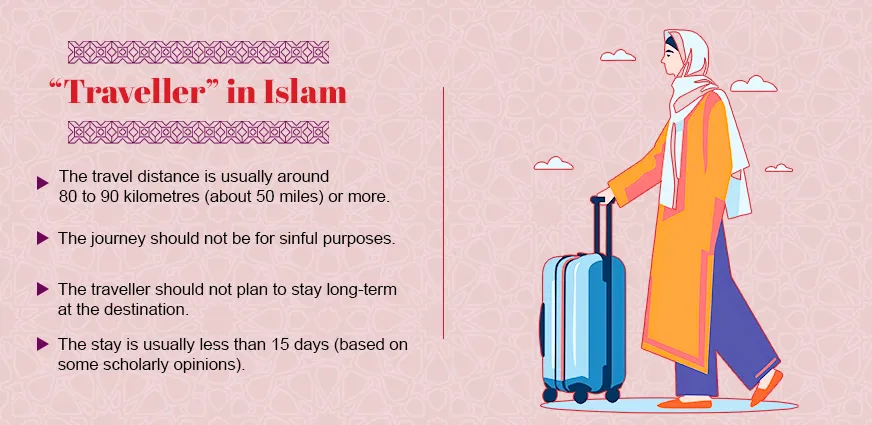
In Islamic law, a traveller (musafir) is someone who leaves their home for a certain distance with the intention of travel.
Most scholars agree on these points:
- The travel distance is usually around 80 to 90 kilometres (about 50 miles) or more
- The journey should not be for sinful purposes
- The traveller should not plan to stay long-term at the destination
- The stay is usually less than 15 days (based on some scholarly opinions)
If these conditions are met, a person is considered a traveller and may use travel concessions.
Who Is Exempt From Fasting in Ramadan?
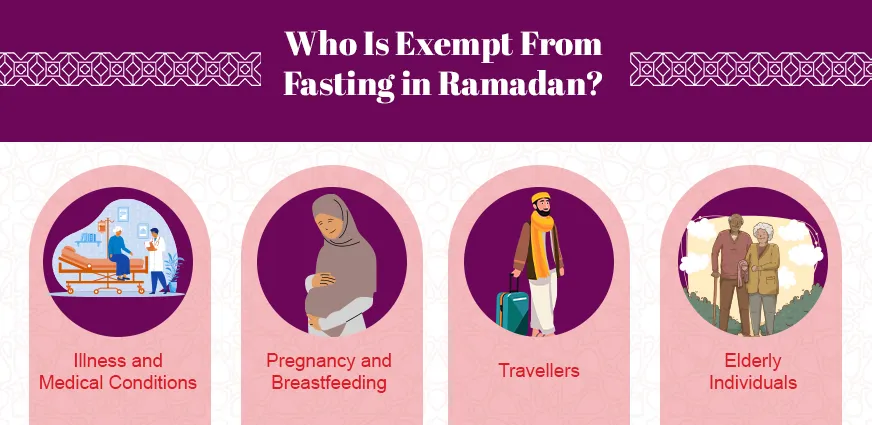
Islam doesn’t want anyone to get sick or hurt from fasting. If fasting is too hard for your body or if it affects your health, you are allowed to skip it. These Ramadan fasting exceptions make sure everyone stays healthy.
Illness and Medical Conditions
What if fasting makes your health worse? Islam says it’s okay to wait until you can skip it for now and do it later when you are well. If you have a long-term health problem, you can fulfil your duty by feeding a person in need (this is called Fidyah).
Pregnancy and Breastfeeding
Are you worried that fasting might be too hard on you or your baby? If so, please know that your health and your little one's safety come first. Islam is very kind about this. If fasting feels risky, you can simply stop for now and wait until you are both strong and healthy to make up those days later.
Elderly Individuals
If you are an elderly individual and are physically unable to fast due to age or any ongoing illness, it is okay for you to stop fasting. Islam is very kind and does not want you to struggle or get sick. Instead of trying to fast those days later, you can give fidyah for each missed day.
Children
Kids don't have to fast until they become young adults. Younger children can practice if they want to, but they should always make sure they are eating enough to stay healthy and happy.
Travellers
Travelling for a long time can be very tiring and may affect your daily routine so Islam makes it easy for you. You don't have to fast while you are travelling if you fall under recognised Ramadan travel exemptions. You can focus on your trip for now and just finish those fasting days later when it's easier for you.
Quick Summary of Exemptions
- Sick individuals
- Pregnant or breastfeeding women (if their health is affected)
- Elderly unable to fast
- Children before puberty
- Travellers meeting travel conditions
When Can a Traveller Break Their Fast?
Islam makes it very clear that if you are fasting while travelling in Ramadan, you are allowed to break it, if needed. There is no need to guess. You can break your fast based on three simple things: your travel status, your timing, and how much you are struggling.
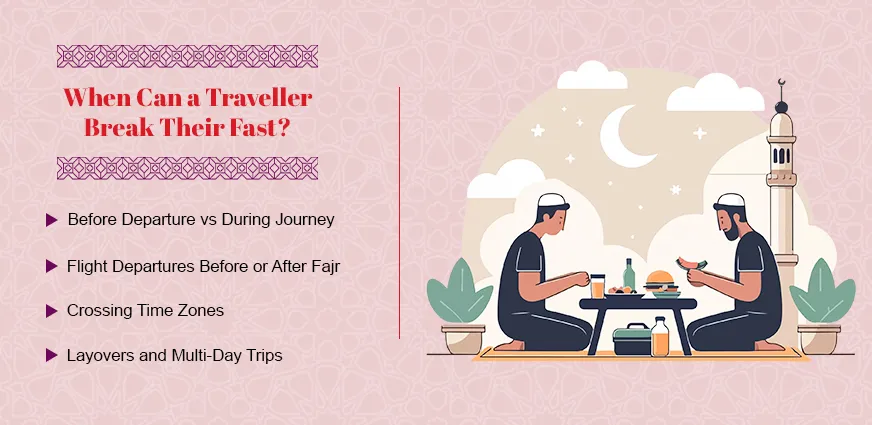
Before Departure vs During Journey
If you started your fast at home, just like any other day, by making your intention (niyyah) before Fajr. While travelling, once you leave your city boundary and officially qualify as a traveller, you are allowed to break your fast if needed.
Flight Departures Before or After Fajr
If you leave before Fajr, you are already travelling before the fast starts, so you don’t have to fast that day. But if you leave after Fajr, you must start your fast at home. Once you are on your way out of the city, you can choose to break it.
Crossing Time Zones
You should always follow the specific time at the actual place where you are standing now. If the sun is up where you are, you are fasting. If the sun sets where you are, you break your fast.
Layovers and Multi-Day Trips
If you are still on your journey, even during a layover, you don't have to fast. But if you stay in one place long enough to be considered "settled" (based on religious rules), you must start fasting again. This counts whether you are flying, taking a train, or driving.
Making Up Missed Fasts, Fidyah, and Kaffarah Explained
When you miss your fast, it is important for you to understand what the compensation is for it.
What Is Qada?
If you miss a fast while you are travelling, you have to make up for it later; this is called Qada. For every one you miss, you must fast for one day later on.
What Is Fidyah?
If you are physically not able to fast because of an ongoing illness or age, you need to feed a poor person for each missed day. This is called Fidyah.
What Is Kaffarah?
If you break your fast without a valid reason, you have to fast for 60 days in a row (without a single break), or you have to feed 60 people who are needy.
| Situation | What Applies |
| Travel hardship | Qada |
| Permanent illness | Fidyah |
| Intentional unjustified break | Kaffarah |
Practical Fasting Tips for Travellers
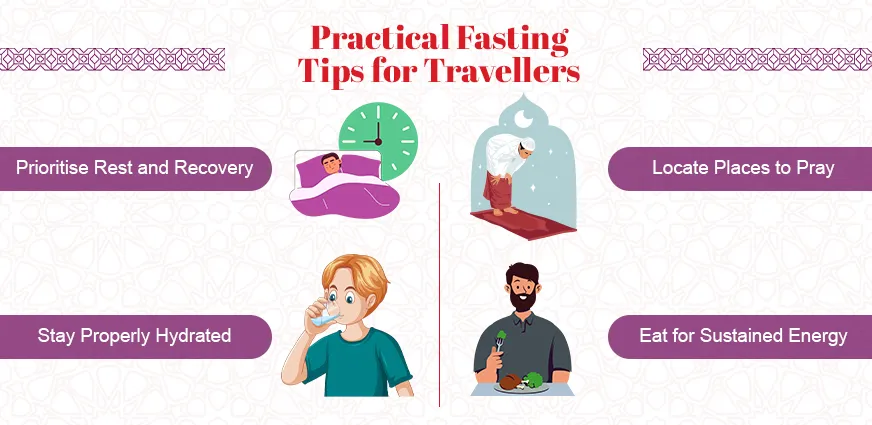
Planning to travel during Ramadan and want to make your Ramadan travel stress-free? It is not an impossible task to do; all you have to do is a little bit of planning that helps you to stay on track and keep things simple while you move.
Prioritise Rest and Recovery
Want to feel good when you arrive at your destination? You need to follow simple tips in order to get that. Start with good sleep before you leave. You should nap on the plane or train, don’t be hard on yourself, and give yourself time to adjust to the new schedule.
Stay Properly Hydrated
You should drink plenty of water between Iftar and Suhoor to keep yourself hydrated. It also helps to drink less coffee and tea so your body doesn't lose water too fast during the day.
Do Your Research Early
Before you leave, look up where you can find halal food at your destination. You will find that many airports and big cities have lists of restaurants online that make it easy to see what is available.
Locate Places to Pray
You should check for prayer rooms on the airport’s website before you leave. You will find that most big UK airports have special quiet areas where you can go to pray or just have some calm time.
Eat for Sustained Energy
If you want to stay energised the whole day, you should eat foods that are full of protein and fiber. At Iftar, try not to eat too much at once, because if you overeat, you will feel very heavy and tired.
Think About Your Health
If you take medicine, talk to your doctor before you start fasting. Your health is the most important thing. A doctor can help you stay safe.
You can use these steps to stay calm and organised while fasting during travel. It will make things much easier!
Time Zones, Flights, and Iftar Timing
One common issue when breaking fast while travelling during Ramadan is sunset timing.
- You break your fast according to where you physically are.
- On a plane, if you can see the sun, wait until it sets below the horizon.
- If unsure, follow reliable flight tracking apps or local Islamic timetables.
Airline meal service times do not determine Maghrib. Always rely on actual sunset timing under recognised Ramadan journey rules.
Common Mistakes Travellers Make While Fasting
- Delaying intention (niyyah)
- Guessing prayer times
- Skipping hydration at Suhoor
- Not planning halal meals
- Confusing fidyah with kaffarah
- Assuming travel automatically cancels fasting
Preparation prevents most issues.
Travel During Ramadan with Clarity, Confidence, and Faith
During Ramadan, it is a bit difficult to travel during the fasting time, and to avoid the rush, one has to be well prepared. Well, it is a good idea to plan properly before you journey. You should know the Ramadan fasting rules, but still, it’s up to you to decide what’s best for your body. When you know what to do, you can stay relaxed and focus on your faith. When you plan everything in advance, it really helps you. You should check prayer times, know your travel status, organise meals, and understand when exemptions apply. Just like you prepare your heart for a fast, you should take a moment to prep for your trip. When you travel with the right mindset, clear intention, and practical preparation, you can stay healthy and handle the journey without feeling exhausted.
Planning Umrah this Ramadan? Explore Ramadan Umrah Packages with Emenac Travel for a smooth and spiritually focused journey.