What Is Tawaf in Islam? A Complete Guide for Pilgrims
Experience the complete guide to Tawaf in Islam. Learn step by step how to perform Tawaf during Hajj and Umrah, understand its spiritual meaning, prepare your heart and body, and avoid common mistakes for a peaceful pilgrimage.
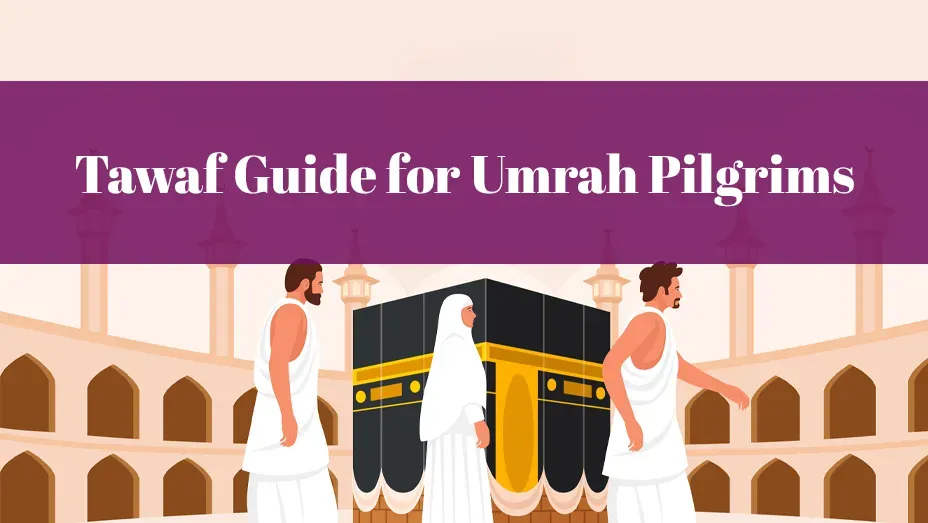
Tawaf is one of the most special acts in Islam. It is not just a walk. It is not only about moving the feet. This moment is about the heart, the soul, and the deep love a believer feels for Allah. Each year, people leave their homes far away. When they reach the Kaaba, all of those differences fade. Everyone turns in the same direction. Tawaf means walking around the Kaaba seven times in a calm, respectful manner.
Muslims face the Kaaba during daily prayers, and during Hajj and Umrah journey, they walk around it to show love, obedience, and closeness to Allah. Many people feel nervous before doing Tawaf for the first time. Crowds may look heavy. Feelings may rise quickly. Rules may sound confusing at first. Yet Tawaf does not need to feel scary. With gentle knowledge and soft preparation, this worship becomes peaceful, simple, and deeply moving.
Understanding the Spiritual Meaning of Tawaf

The word Tawaf comes from an Arabic term meaning “to walk around something.” In Islam, it means walking around the Kaaba slowly and respectfully, remembering Allah. This movement is not random. It follows a sacred pattern that has been part of worship since the time of Prophet Ibrahim. Tawaf shows that Allah stands at the center of life. When believers walk around the Kaaba, they are placing Allah at the center of their hearts, their prayers, and their choices.
Every step becomes a reminder that nothing is greater than Him. This movement also mirrors how angels circle the Throne of Allah in constant worship. All pilgrims walk in the same direction, which is counterclockwise. This direction follows the natural movement observed in creation, such as planets moving through space and tiny particles orbiting a center. It quietly reminds believers that all of creation follows Allah’s command.
Another beautiful meaning of Tawaf is unity. People of all races, countries, and ages walk together. Rich and poor stand side by side. No one is higher. No one is lower. In that space, everyone is simply a servant of Allah.
Preparing the Heart and Body Before Tawaf
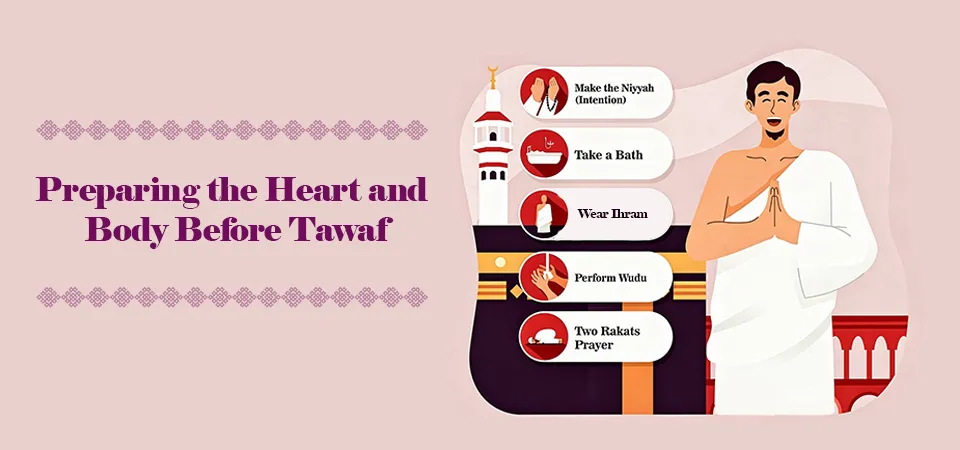
Before Tawaf begins, both the body and the heart need gentle care.
Keeping the Body Pure With Wudu
The first physical step is Wudu. Wudu means washing certain body parts in a clean way. Hands, face, arms, head, and feet are gently washed with water. This is done before prayer and before Tawaf to stay pure. Cleanliness in Islam is not only about the body. It also helps the heart feel ready for worship.
Entering the State of Ihram
For people performing Hajj or Umrah, Ihram is also needed. Ihram means wearing special, simple clothes and entering a sacred state of worship. In this state, certain actions are avoided, like arguing, harming others, or cutting hair and nails. The simple clothing also removes differences. Everyone looks similar.
Setting a Calm and Sincere Intention
Mental preparation is just as important as physical steps. Before starting Tawaf, many pilgrims pause quietly. They have a sincere intention in their hearts. Intention means deciding clearly that this worship is only for Allah. Some whisper small prayers. Some stay silent. Both ways are correct. What matters is the calm feeling of purpose that settles inside before walking begins.
Step-by-Step Guide to Performing Tawaf Correctly
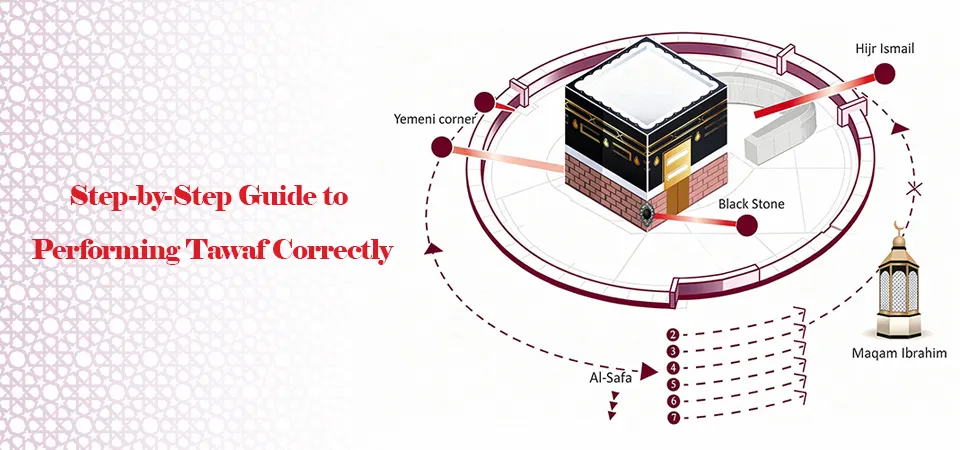
Tawaf follows a simple rhythm that becomes comforting once the body understands the flow. Each step is gentle. Each movement has meaning. When done slowly and with care, the heart stays focused and calm.
Beginning at the Black Stone
Tawaf always starts at the Black Stone. The Black Stone is a sacred stone placed in one corner of the Kaaba. Pilgrims face it and quietly make their intention for Tawaf. When the area is crowded, there is no need to push. In that case, pilgrims simply raise their right hand toward the stone and say “Allahu Akbar.” This means “Allah is the Greatest.” This simple action carries the same spiritual meaning without causing harm or stress.
Keeping the Correct Direction
Each round begins and ends at the Black Stone. During every step, the Kaaba must stay on the left side of the body. This keeps the movement in the correct direction. Walking is done calmly. Slow steps protect the peaceful feeling of the ritual. Rushing, pushing, or forcing space breaks the quiet spirit of Tawaf. Gentle movement allows everyone to worship safely and keeps the heart focused.
Making Personal Prayers During the Walk
There are no fixed words that must be said during Tawaf. This gives freedom to every pilgrim. Some whisper prayers and ask for forgiveness. Some thank Allah, and some stay quiet and simply remember Him. A common prayer is often said while walking between the Yemeni Corner and the Black Stone. This prayer asks Allah for goodness in this life and in the life to come.
Completing the Seven Rounds
The Yemeni Corner is gently touched with the right hand if it is easy to reach. Each full circle around the Kaaba counts as one round. Tawaf is complete after seven full rounds. Once the seventh round ends, two units of prayer are offered. This is usually done near Maqam Ibrahim. If the area is crowded, the prayer can be done anywhere inside the mosque.
Common Mistakes Pilgrims Should Avoid
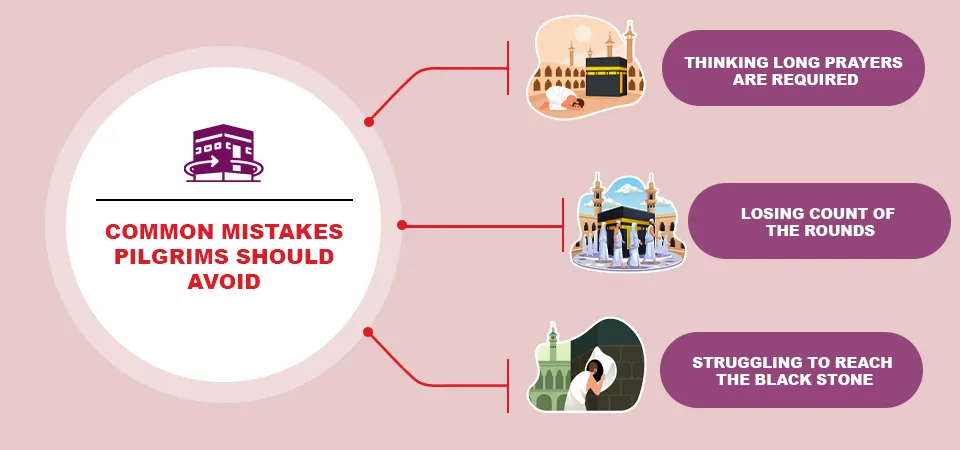
Tawaf is simple by design, but nervousness can sometimes make it feel harder than it really is. When the heart becomes tense, small mistakes may happen. Knowing what to avoid helps keep the ritual calm and meaningful.
Thinking Long Prayers Are Required
One of the most common misunderstandings is the belief that long prayers must be memorised for each round. This is not true. Tawaf does not demand special phrases for every step. Quiet words spoken from the heart are enough. Short prayers, soft whispers, or even silent remembrance are all accepted forms of worship. What matters most is sincerity, not the length of the words.
Losing Count of the Rounds
Another frequent issue is forgetting how many rounds have been completed. This can cause stress and confusion, especially in large crowds. Pilgrims can count on their fingers or use small prayer beads to stay aware of their progress. Staying inside the main walking path is also important. Walking outside the designated Tawaf area may cause a round not to be counted, which can require pilgrims to repeat parts of the ritual.
Struggling to Reach the Black Stone
Many pilgrims feel pressure to touch the Black Stone. Touching it is Sunnah, which means it is recommended but not required. It is not a condition for Tawaf to be accepted. Pushing through crowds or feeling angry while trying to reach it can take away the calm spirit of worship. Raising the hand toward the stone and saying “Allahu Akbar” carries the same reward and keeps everyone safe and peaceful.
The Different Types of Tawaf
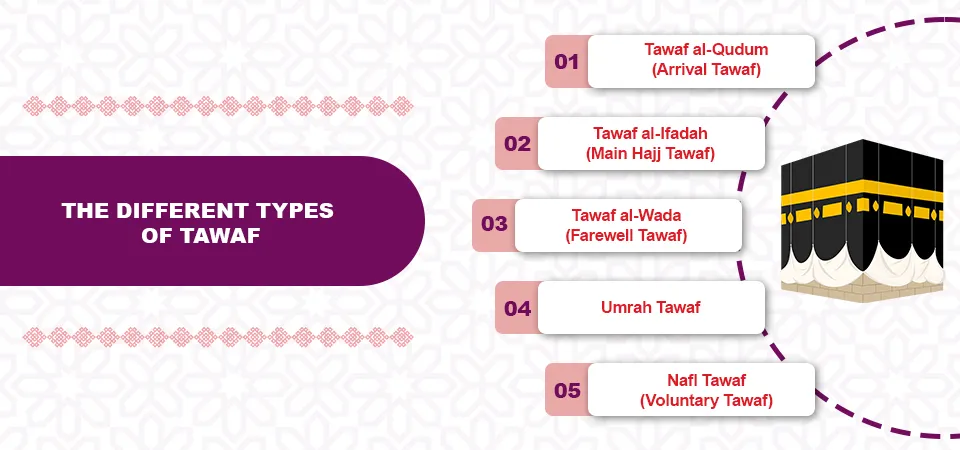
Not every Tawaf is the same. Each one has its own role and special time. Knowing these types helps pilgrims understand when Tawaf is needed and why it is done, and it also keeps the journey clear and calm.
Tawaf al-Qudum (Arrival Tawaf)
Tawaf al-Qudum is the Tawaf done when pilgrims first enter Makkah for Hajj before the main Hajj days begin. It is the way the heart says hello to the Sacred House before the body even begins to rest.
Tawaf al-Ifadah (Main Hajj Tawaf)
Tawaf al-Ifadah is one of the main pillars of Hajj. A pillar means a required act that must be done for Hajj to be complete. This Tawaf is performed after standing at Arafat and spending the night in Muzdalifah. Without completing this Tawaf, the Hajj remains incomplete, even if all other rituals are done correctly.
Tawaf al-Wada (Farewell Tawaf)
Tawaf al-Wada is the final Tawaf done before leaving Makkah after finishing Hajj. It is a soft and emotional goodbye to the Kaaba. Many hearts feel heavy during this Tawaf because pilgrims know their sacred journey is coming to a close. It is a moment filled with gratitude, tears, and silent prayers.
Umrah Tawaf
Umrah Tawaf is the Tawaf that begins the Umrah ritual. After completing this Tawaf, pilgrims walk between Safa and Marwah and then cut or shave their hair. This Tawaf is required for Umrah to be accepted. Without it, Umrah is not considered complete.
Nafl Tawaf (Voluntary Tawaf)
It is extra worship done by choice. Nafl means worship that is not required but done out of love and desire to grow closer to Allah. Pilgrims may perform this Tawaf any time while staying in Makkah. Many people choose quiet hours to perform it when the mosque feels calm and peaceful.
Practical Tips for a Smooth Tawaf Experience
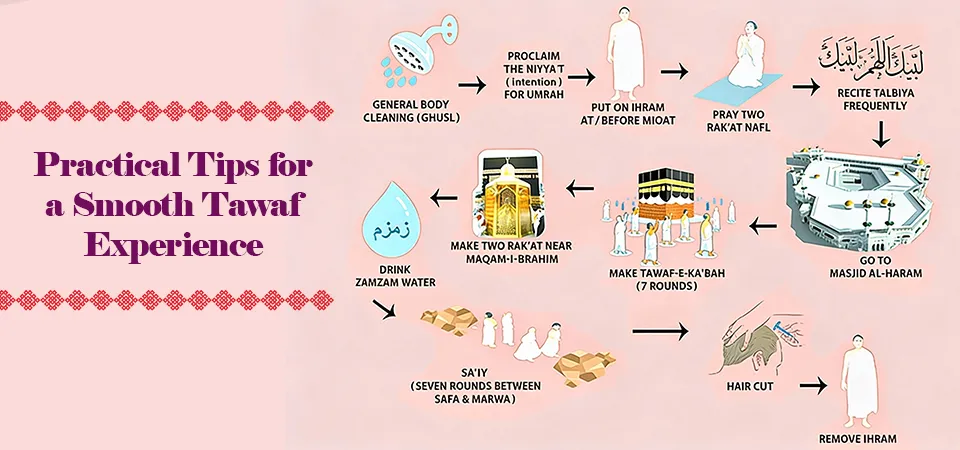
Here’s what you need to remember
Choose Calm Hours for Tawaf
Time plays a very big role in how Tawaf feels. During busy prayer times and peak seasons, Masjid al-Haram becomes very full, and movement slows down. Early mornings after Fajr prayer and late evenings before midnight are usually calmer. These quieter hours allow pilgrims to walk more freely, breathe more easily, and keep their hearts focused on prayer.
Wear Light and Comfortable Clothing
Comfort helps the body stay steady during Tawaf. Light clothes allow better movement and prevent overheating. Soft and supportive shoes make walking easier on the smooth marble floors. Carrying a small prayer mat is also useful, especially when offering the two units of prayer after Tawaf in areas where clean floor space is limited.
Keep the Body Hydrated with Zamzam
Staying hydrated keeps the body strong and alert. Zamzam water is available inside the mosque. Zamzam is blessed water that pilgrims drink for strength, healing, and spiritual benefit. Drinking it before and after Tawaf helps prevent weakness and keeps the body refreshed.
Walk with Experience When Needed
First-time pilgrims often feel more relaxed when walking with someone experienced. A guide or knowledgeable friend can quietly help with directions and gentle reminders. This soft guidance prevents confusion and helps keep the experience calm and focused.
Managing Emotions and Staying Focused
Seeing the Kaaba for the first time can be overwhelming. Many pilgrims cry, freeze, or feel sudden waves of emotion. These feelings are natural and part of the spiritual beauty of the moment. It is okay to feel deeply, but it is also important to remain aware of one's surroundings. Crowds, heat, and physical tiredness may test patience. Each moment of patience is also worship. Staying calm keeps the heart open and protects the meaning of Tawaf.
Walking slowly and gently allows the soul to absorb the moment. Tawaf is not a race. Each round can carry a personal prayer.
What to Do After Completing Tawaf
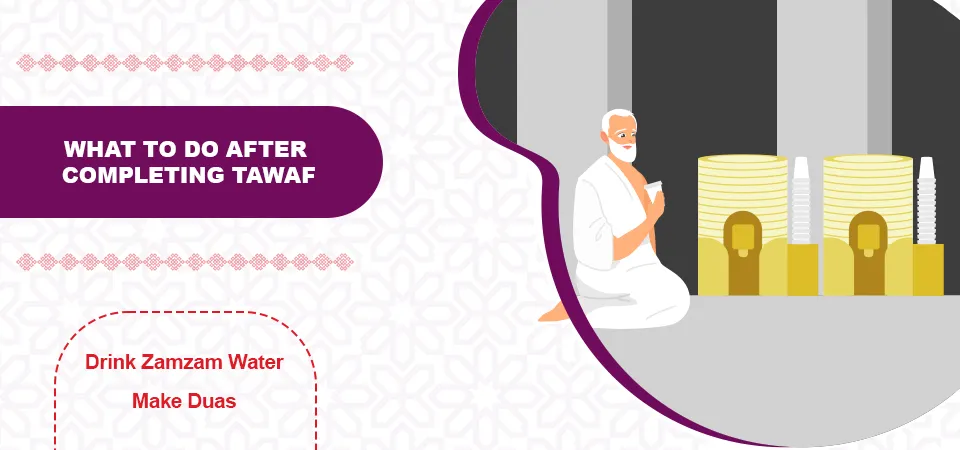
After finishing the prayer, pilgrims drink Zamzam water and make their own quiet duas. Many people believe that when someone drinks Zamzam and asks Allah for help, those prayers carry special goodness. Zamzam is blessed water that Allah gave to give strength to the body and peace to the heart.
Sitting quietly after Tawaf makes the experience feel deeper. Thinking about how many people walked together, how calm the worship felt, and how close the heart felt to Allah helps keep that feeling alive even after returning home. Sharing the journey with family or writing a few words about it also keeps the memory warm. These small acts help the heart remember Tawaf long after leaving Makkah.
Final Thoughts
Tawaf is more than seven rounds around a building. It is a lesson in humility. It is a lesson in patience. Each pilgrim becomes part of a chain of believers that began with Prophet Ibrahim and continues today. The peace, unity, and gratitude learned during Tawaf often stay in the heart long after returning home. These lessons shape how believers treat others, how they pray, and how they carry faith into daily life.
With gentle preparation, calm intention, and simple understanding, Tawaf becomes not only correct in form but also rich in meaning. It becomes a moment the heart never forgets.